

Travel Guide
My Son Sanctuary – The Mysterious Ruins of the Champa Kingdom
Introduction to the My Son Sanctuary
Deep in the lush valleys of Quang Nam Province lie the remnants of a once-mighty civilization. The My Son Sanctuary, a UNESCO World Heritage Site, was the spiritual and political capital of the Champa Kingdom from the 4th to the 13th centuries. Today, moss-covered brick towers and intricate bas-reliefs stand as testimony to an indigenous culture influenced by Hinduism and the Indian subcontinent.
At GrandViet Tour, we guide travelers through these mysterious ruins, highlighting their historical significance and the natural beauty surrounding them. Discover why this sacred site, often compared to Angkor Wat on a smaller scale, remains a must-visit for those seeking to understand Vietnam’s diverse cultural tapestry.
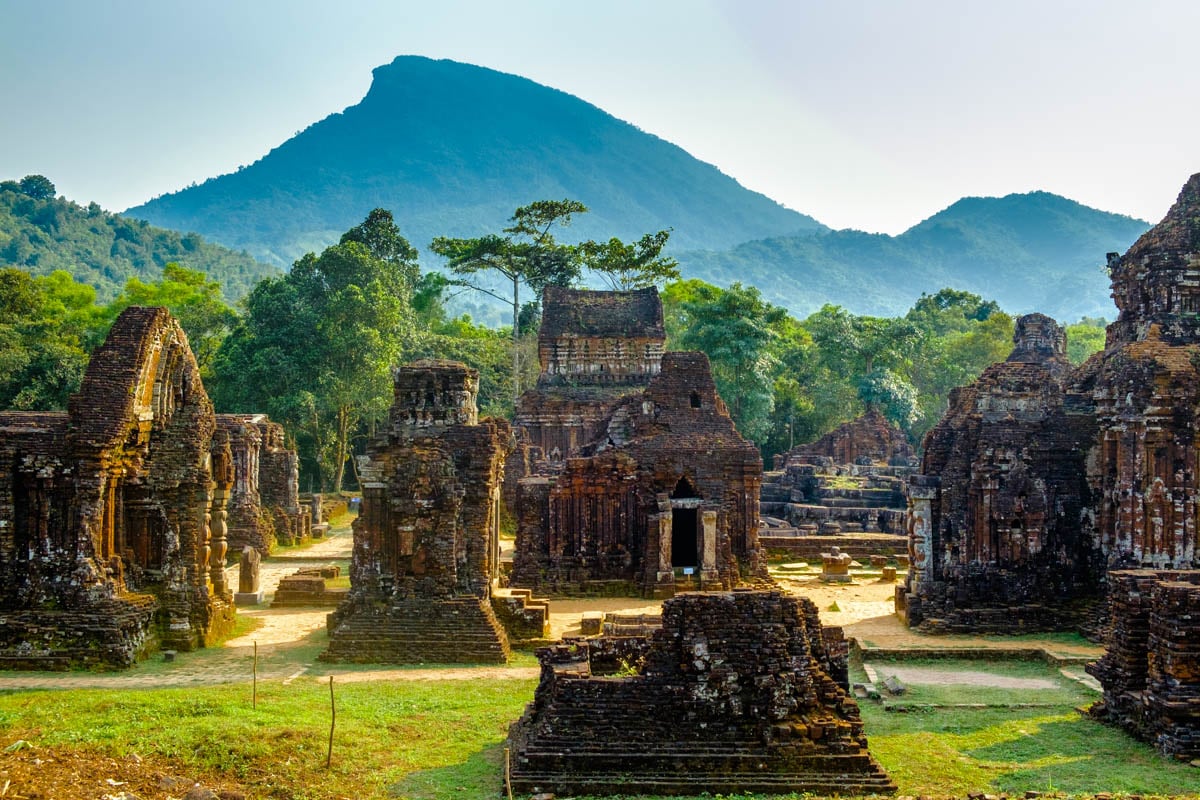
Red brick towers and elaborate carvings reveal the artistry of the Champa civilization.
My Son Sanctuary – Key Highlights
The sanctuary comprises dozens of temple groups dedicated to Hindu deities such as Shiva, who was revered by the Champa kings. Each ruin reflects the artistry and architecture of the era:
● Group B, C & D Ruins: These central clusters showcase the oldest standing structures, with towers built on sandstone foundations and decorated with dancing apsaras (celestial beings).
● E and F Groups: More secluded, these ruins highlight the diversity of Champa temple layouts and architectural evolution over centuries.
● G Group: Contains the largest tower known as Kalan G, once the central sanctuary of the site, now partially restored.
● My Son Museum: At the entrance, the museum offers context through artifacts and interpretive displays about Champa history, daily life, and religious practices.
● Surrounding Nature: Verdant hills and the Thu Bon River create a serene backdrop, inviting visitors to reflect on the harmony between architecture and environment.
Exploring these highlights reveals how My Son served not only as a religious center but also as a testament to the engineering and artistic skills of the Champa people.
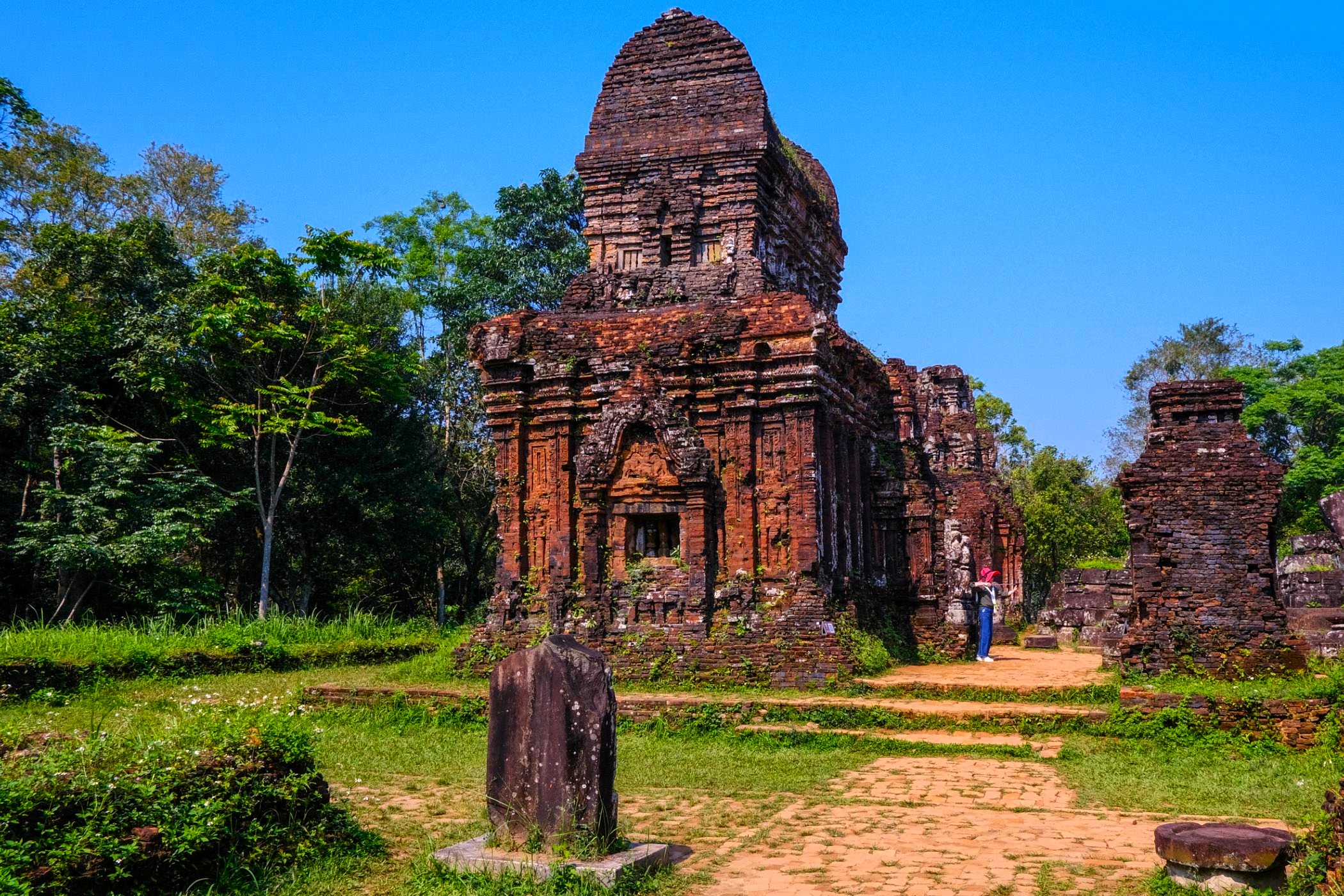
Temples of Group B stand firm, resilient after centuries of history and conflict.
When to Visit My Son Sanctuary (Weather & Seasons)
Central Vietnam experiences two main seasons, both offering different ways to experience My Son Sanctuary:
● Dry Season (February–August): Warm temperatures (25–35°C) and blue skies make for clear photography. However, midday heat can be intense—early morning visits are best.
● Rainy Season (September–January): Frequent showers cool the air and create a mystical atmosphere as mist rises from the ruins. The lush greenery is at its peak, but some paths can be muddy.
We recommend visiting from March to May or October to December, when weather conditions are moderate. GrandViet Tour arranges sunrise tours to avoid the heat and crowds, providing quiet moments for reflection amid ancient stones.
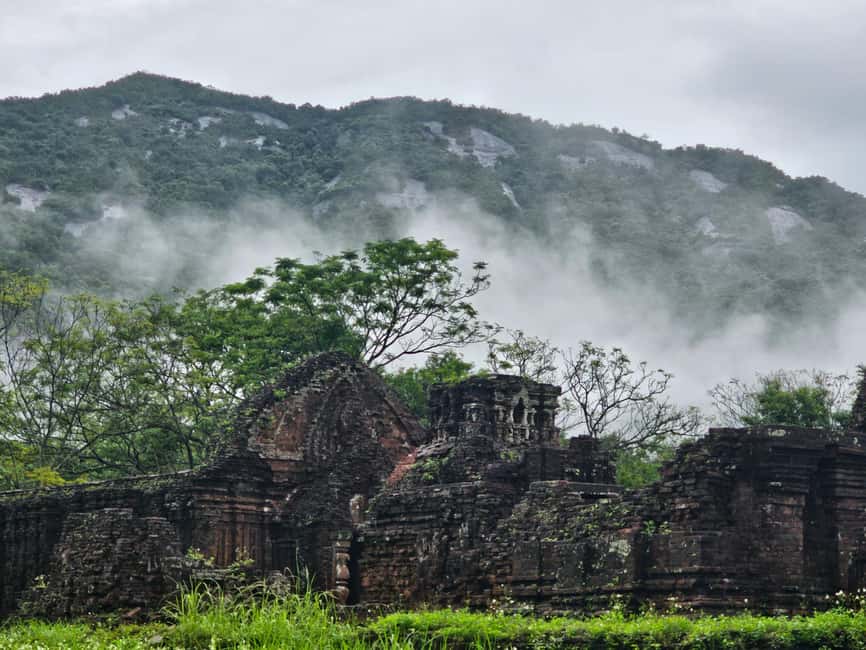
Morning mist shrouds My Son’s ruins during the rainy season, adding mystery to the scene.
Top Experiences & Itineraries My Son Sanctuary
While the site can be visited in half a day, deeper exploration reveals its layers of history and culture:
Half-Day Excursion from Hoi An or Da Nang
● Early Departure: Leave before sunrise to arrive as the gates open. Enjoy cooler temperatures and soft light illuminating the ruins.
● Guided Walking Tour: Our guides explain the religious symbolism, architectural techniques, and stories behind the carvings.
● Cultural Show: After touring, watch a traditional Cham dance performance at the visitor center, reviving the artistic heritage of the region.
Full-Day Historical and Cultural Tour
● My Son & Tra Kieu: Combine the sanctuary with a visit to Tra Kieu, the ancient Champa capital, to see relics at a local church and museum.
● Boat Trip on Thu Bon River: Cruise back to Hoi An along the river, passing by rural villages and lush rice fields.
● Cham Crafts Workshop: Participate in a hands-on workshop where artisans teach you to weave mats or carve wooden motifs inspired by Champa designs.
Extended Cultural Journey
● Cham Heritage Trail: Travel beyond My Son to the Cham Museum in Da Nang and the Po Nagar Cham Towers in Nha Trang, tracing the kingdom’s spread along Vietnam’s coast.
● Cycling Tour: Explore the countryside around My Son, meeting local farmers and learning about contemporary life in the valley.
Our itineraries ensure that visitors not only see the ruins but also connect with the living culture of the Cham descendants.
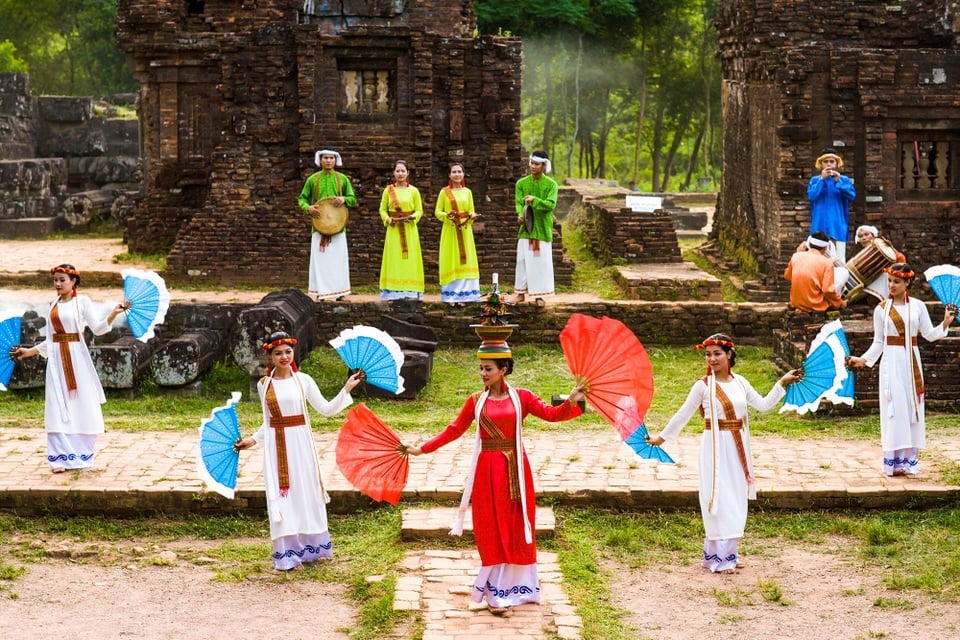
Traditional Cham dancers perform ancient rituals, preserving cultural heritage.
How to Get My Son Sanctuary (From Hoi An, Da Nang & Beyond)
My Son Sanctuary is approximately 40 kilometers southwest of Hoi An and 70 kilometers from Da Nang. Access options include:
● By Road: The fastest route is by car or minivan along well-maintained highways. Travel time is around 1–1.5 hours from Hoi An.
● By Motorbike: Adventurous travelers can ride through scenic countryside roads; we provide maps and safety briefings.
● By Bus: Public and tourist buses run daily from Hoi An, with departures early in the morning.
● By Tour Package: Most visitors prefer organized tours that include transport, entrance tickets, and a guide—GrandViet Tour provides these for convenience and education.
We also offer combined tours that start in Da Nang or Hue, making My Son accessible from across central Vietnam.
Where to Stay (Base Cities & Eco-Lodges)
As My Son Sanctuary does not have accommodation on-site, travelers stay in nearby cities:
● Hoi An: A UNESCO-listed ancient town with riverside hotels, boutique homestays, and cultural charm. It’s the most popular base for visiting My Son.
● Da Nang: A modern coastal city with international hotels, beach resorts, and easy airport access. Suitable for those combining My Son with city attractions.
● Eco-Lodges Near My Son: A handful of eco-friendly guesthouses in rural areas offer immersive experiences amid nature, ideal for quiet retreats.
GrandViet Tour helps you choose the right base based on your itinerary and preferences—whether you desire the lantern-lit streets of Hoi An or Da Nang’s coastal vibes.
Travel Tips, Costs & Etiquette My Son Sanctuary
Visiting My Son Sanctuary requires preparation to respect the site and stay comfortable:
Entrance & Costs:
- Admission ticket: 150,000 VND per adult, including access to the dance show.
- Guide fee (if hired on-site): 200,000–400,000 VND.
- Transportation: A private car from Hoi An costs approximately 600,000–800,000 VND round-trip.
Practical Tips:
- Dress Appropriately: Wear lightweight clothing, comfortable shoes, and bring sun protection or rain gear, depending on the season.
- Hydrate & Snack: There are limited refreshment options inside; carry water and light snacks.
- Respect the Ruins: Do not climb on the structures or remove any artifacts; the site is fragile.
- Photography: Tripods may require permission; avoid flash in areas with sensitive carvings.
- Accessibility: Some paths are uneven; visitors with mobility issues should inform us so we can plan accordingly.
At GrandViet Tour, we emphasize responsible tourism—helping preserve this cultural treasure while providing enriching experiences.
Why Travel with GrandViet Tour
We at GrandViet Tour are passionate about sharing Vietnam’s lesser-known heritage sites with travelers. Our knowledgeable guides have studied the history of My Son Sanctuary and the Champa civilization, enabling them to answer questions beyond the basics.
When you travel with us, you’ll benefit from:
- Cultural Insight: Detailed explanations of Hindu symbolism, Champa architecture, and historical context.
- Community Connection: Opportunities to meet Cham artisans and communities who continue to practice ancestral arts.
- Comfort & Safety: Reliable transport, early-morning starts to avoid heat and crowds, and guidance on navigating the site’s uneven terrain.
- Personalized Service: We customize tours based on your interests—whether you prefer history, photography, or cultural immersion.
Explore My Son Sanctuary with GrandViet Tour, and step into a world where Vietnam’s past comes alive in brick and stone.
See more:
- Classic Places to Visit in Vietnam for First-Time Travelers
- Ha Giang Travel Guide: Loop Route, Ethnic Culture & Views
- Top Historical Sites in Vietnam Every Tourist Should Visit
- Hoi An Travel Guide: Ancient Town, Food & Tailor Tips
- Da Lat Travel Guide: Cool Weather, Nature & Things to Do
- Hue Travel Guide: Imperial Sites, Food & Local Tips
- Phu Quoc Travel Guide: Beaches, Night Markets & More
Tour Vietnam Here
FAQs
Q1: How old is My Son Sanctuary?
A1: Construction began in the 4th century and continued until the 13th century, making the ruins over a millennium old.
Q2: Can I visit My Son and Hoi An in one day?
A2: Yes. My Son is a half-day trip from Hoi An, allowing time to return for afternoon or evening activities in Hoi An.
Q3: Is the site accessible for children?
A3: Children can visit, but parents should supervise them closely due to uneven ground and delicate structures.
Q4: What languages do guides speak?
A4: Our guides speak English and Vietnamese, and we can arrange tours in other languages upon request.
Q5: Are drones allowed at My Son?
A5: Drone use is restricted; permits must be obtained in advance from heritage authorities.
Q6: What is the best time of day to visit?
A6: Early morning (7–9 AM) to avoid heat and crowds.
Q7: Why book with GrandViet Tour?
A7: We provide expert guides, comfortable transportation, and personalized itineraries that enrich your understanding and ensure a safe, hassle-free experience.
Other articles


© GrandViet Tour Co., Ltd. - International Tour Operator Licence 01-217/TCDL-GPLHQT.
Copyright © 2006 - 2020. All Rights Reserved.