

Travel Guide
Pongour Waterfall – The Most Spectacular Cascade in Da Lat
Introduction to the Pongour Waterfall
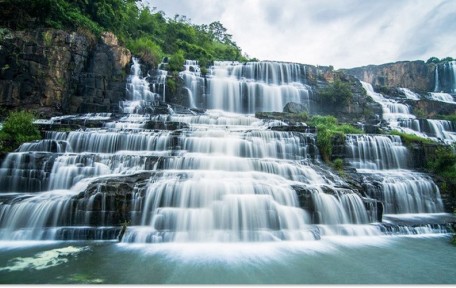
Amidst the pine‑clad hills of Vietnam’s Central Highlands, Pongour Waterfall unfolds like a grand amphitheater of water and stone. Known locally as “Seven‑Tiered Fall”, Pongour stretches 100 meters wide and tumbles 40 meters down terraced rock, creating cascades that resemble staircases carved by ancient sculptors. This natural wonder sits 50 kilometers south of Da Lat, making it one of the region’s most famous yet tranquil attractions.
At GrandViet Tour, we believe that waterfalls like Pongour are not just scenic; they’re cultural. This guide highlights the history and legends tied to the falls, outlines how to visit, and shares why traveling with us deepens your connection to this magnificent site.
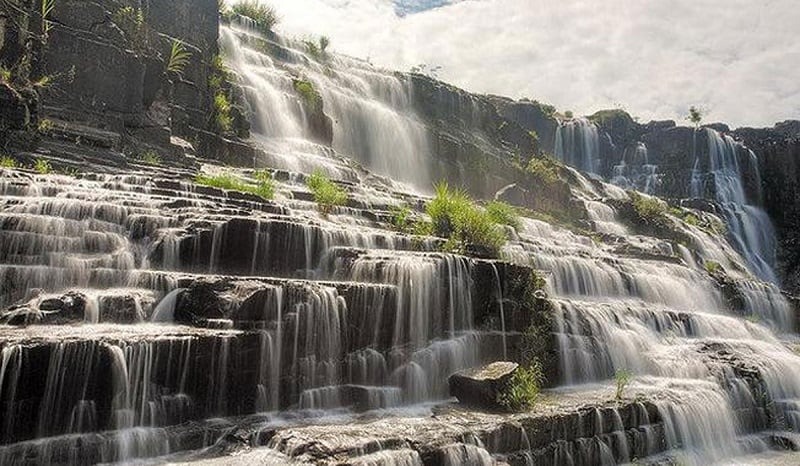
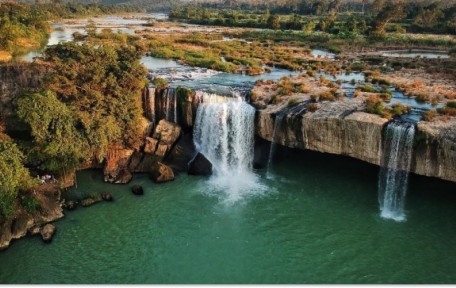
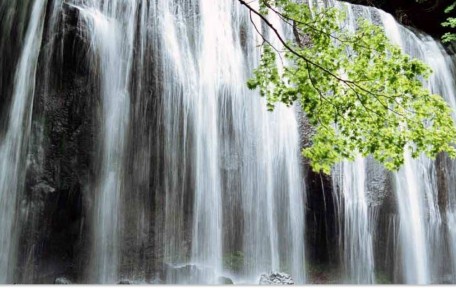
The broad, tiered expanse of Pongour Waterfall in full flow.
Pongour Waterfall – Key Highlights
Pongour is formed by the Da Nhim River tumbling over a series of basalt layers formed millions of years ago. Its symmetrical, stair‑like structure and lush surroundings have earned it the title “the most beautiful waterfall in the South.”
- Seven tiers: Water cascades over seven natural steps, creating soft curtains of spray on each level.
- Legend of Kanai: According to K’Ho folklore, a female chieftain named Kanai once tamed hundreds of rhinoceroses here. When she died, the animals circled the mountain and turned to stone, forming the waterfall’s tiers.
- Spacious grounds: Unlike many waterfalls hidden in narrow ravines, Pongour opens onto a wide valley, offering ample space for picnics and exploration.
- Full‑moon festival: Every year on the 15th of the first lunar month, local people hold a celebration with traditional music and flower rituals at the falls.
The combination of geological wonder and myth makes Pongour a site of both natural and cultural significance.
When to Visit Pongour Waterfall (Weather & Seasons)
Da Lat’s highland climate is cooler than the lowlands, with two distinct periods:
- Rainy season (May – October): Heavy rains feed the Da Nhim River, producing a powerful cascade. Temperatures range 18–23 °C. Trails can be muddy, but the waterfall is at its most impressive.
- Dry season (November – April): Clear skies and mild temperatures (15–22 °C) make it easier to walk along the riverbank. Water flow decreases but reveals intricate rock patterns.
For dramatic views, visit from July to September. For comfortable walks and picnics, choose December to February, when the weather is cool and flowers bloom across the highlands. We arrange visits year‑round, adjusting itineraries to the season.
Top Experiences & Itineraries - Pongour Waterfall
Whether you’re a day‑tripper from Da Lat or part of a longer journey through the Central Highlands, Pongour Waterfall fits easily into your plans:
Half‑Day Trip
Depart Da Lat in the morning for the 50‑kilometer drive south via Highway 20. Upon arrival, take a 10‑minute walk down stone steps to the falls. Wander along the terraces, cross the river via rocks (in dry season), and picnic on grassy banks. Stop by local coffee farms on the return drive.
Day Tour with Cultural Sites
Combine Pongour with other attractions like Elephant Waterfall, Linh An Pagoda, or a silk factory in Nam Ban. Enjoy a highland lunch of grilled chicken and bamboo rice. Our guides share stories of K’Ho culture and the legends behind each site.
Multi‑Day Highland Journey
Include Pongour in a broader itinerary covering Da Lat’s lakes, gardens, and waterfalls such as Datanla and Cam Ly. Add visits to ethnic minority villages around Lak Lake or explore Buon Ma Thuot’s coffee plantations and Dray Nur waterfalls.
With GrandViet Tour, itineraries are flexible; we craft them around your interests and pace.
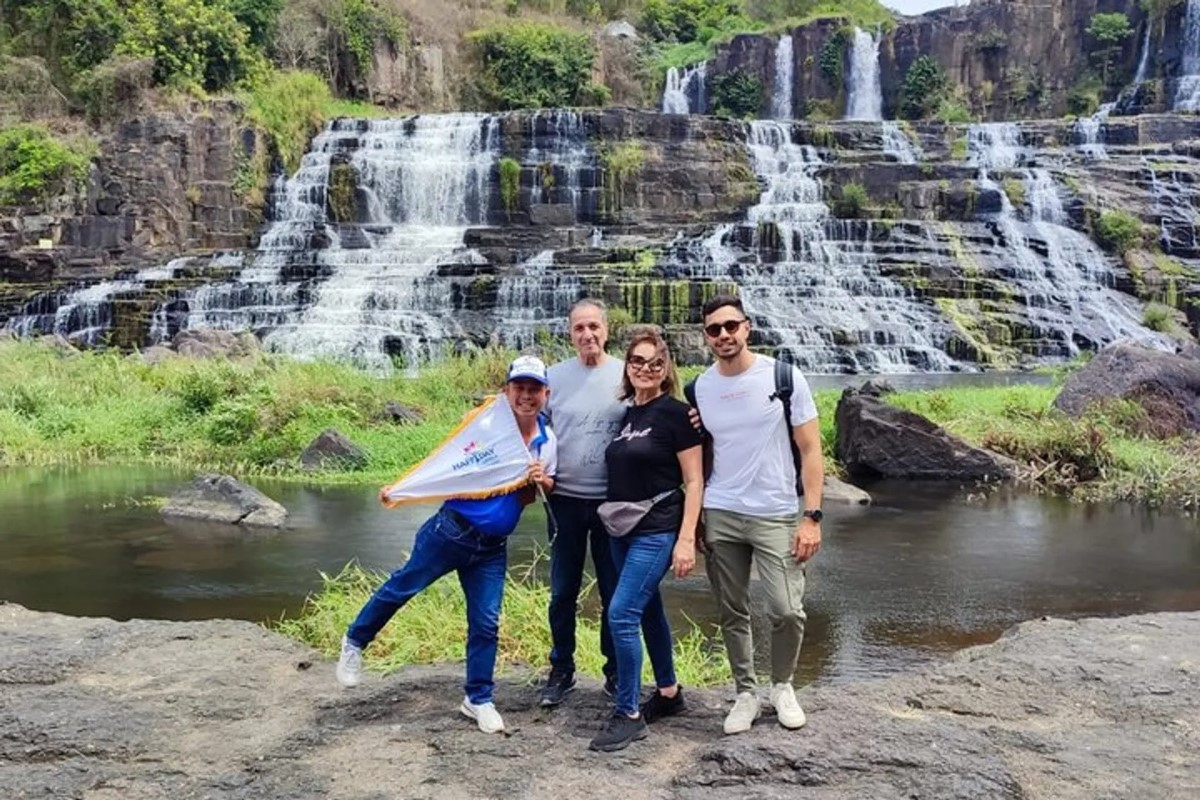
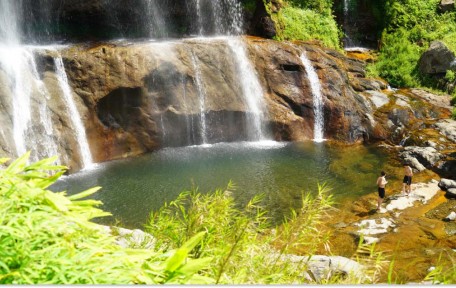
Visitors walking along the basalt steps of Pongour waterfall during the dry season.
How to Get Pongour Waterfall (From Da Lat & Other Hubs)
Pongour Waterfall is about 50 kilometers south of Da Lat City and 20 kilometers from Bao Loc.
- By car or motorbike: The most common route is via National Highway 20. It takes roughly 1 hour by car from Da Lat. Guided tours ensure safe driving, especially during rains.
- By bus: Local buses run from Da Lat to Bao Loc and can drop you near the waterfall turnoff, but you will need to arrange a taxi or motorbike for the final stretch.
- From Ho Chi Minh City: Pongour lies along the route to Da Lat (around 300 kilometers). Many travelers stop here en route to or from the highland city.
Our GrandViet Tour packages include comfortable transport with licensed drivers familiar with mountain roads.
Where to Stay (Hotels & Homestays)
Most visitors stay in Da Lat or Bao Loc, where accommodation options abound:
- Da Lat hotels: From French colonial villas to boutique hostels, the city offers stays for all budgets.
- Bao Loc guesthouses: A quieter town with tea plantations and waterfalls nearby. Choose from cozy homestays and simple hotels.
- Countryside eco‑lodges: A few eco‑resorts near Pongour provide rustic bungalows surrounded by coffee farms and pine forests.
GrandViet Tour partners with reputable lodgings and can recommend options based on your preferences—be it luxury, comfort, or immersive rural experiences.
Travel Tips, Costs & Etiquette - Pongour Waterfall
Keep these points in mind when visiting Pongour Waterfall:
- Entrance fee: Expect to pay about 20,000–30,000 VND to access the falls.
- What to bring: Sturdy shoes (for walking on wet basalt), a light jacket, camera, water, snacks, and cash.
- Safety: Do not climb on wet rocks during the rainy season. In dry months, some visitors cross the river on exposed rocks but always take care.
- Cultural respect: If you visit during the full‑moon festival, participate respectfully. Support local vendors selling coffee, fruits, or woven goods.
- Food: Simple eateries near the parking area serve noodles, coffee, and highland specialties. You can also pack a picnic.
Highland weather can be unpredictable—prepare for sun and rain. We remind guests to carry reusable bottles and minimize plastic waste during their trip.
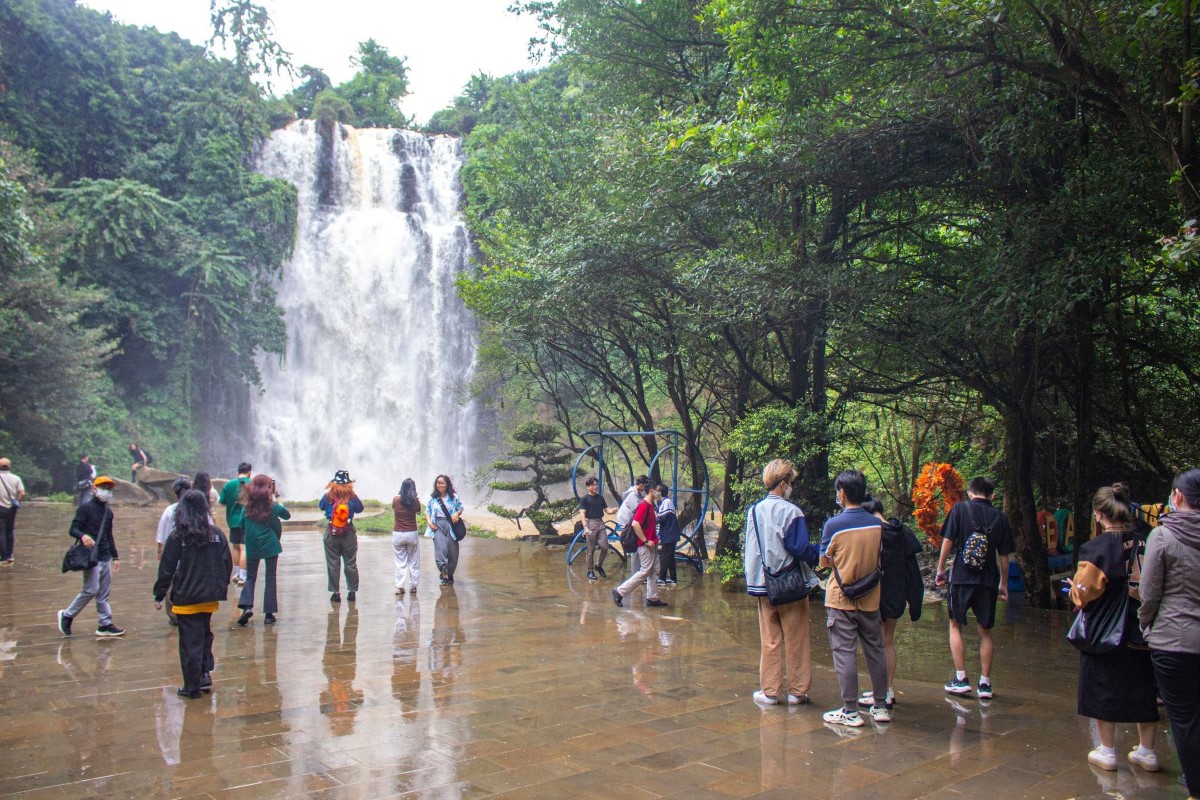
Travelers enjoying a picnic on the grassy banks overlooking Pongour.
Why Travel with GrandViet Tour
We take pride in showing visitors the hidden and celebrated gems of Vietnam’s Central Highlands. Choosing GrandViet Tour for your Pongour waterfall adventure ensures:
- Insightful narratives: Our guides share legends of Kanai, explain basalt formations, and point out local flora and fauna.
- Seamless travel: We handle transportation, parking, and coordination with local communities.
- Tailored itineraries: From quick stops to multi‑day tours that weave together waterfalls, pagodas, and villages, we create experiences that match your interests.
- Responsible tourism: We support community initiatives and emphasize environmental respect, ensuring that Pongour remains pristine for generations.
Let us lead you to the cascading terraces of Pongour. Join GrandViet Tour and feel the spray of these seven steps while immersing yourself in highland lore.
See more:
- Classic Places to Visit in Vietnam for First-Time Travelers
- Ha Giang Travel Guide: Loop Route, Ethnic Culture & Views
- Top Historical Sites in Vietnam Every Tourist Should Visit
- Hoi An Travel Guide: Ancient Town, Food & Tailor Tips
- Da Lat Travel Guide: Cool Weather, Nature & Things to Do
- Hue Travel Guide: Imperial Sites, Food & Local Tips
- Phu Quoc Travel Guide: Beaches, Night Markets & More
Tour Vietnam Here
FAQs
Q1: Where is Pongour Waterfall?
A1: Pongour is located about 50 kilometers south of Da Lat City in Lam Dong province, along National Highway 20.
Q2: How high and wide is Pongour Waterfall?
A2: The waterfall drops about 40 meters and spans approximately 100 meters across seven terraced steps.
Q3: Is swimming allowed at Pongour?
A3: Swimming is not recommended due to strong currents and slippery rocks. Visitors can wade in shallow areas during the dry season but should exercise caution.
Q4: What is the legend of Pongour Waterfall?
A4: K’Ho legend tells of Kanai, a female chief who tamed rhinoceroses. When she passed away, the animals lay down around her, turning into the rock tiers of Pongour.
Q5: Can I visit Pongour year‑round?
A5: Yes. The waterfall is accessible throughout the year, though the rainy season (May – October) provides the most dramatic flow.
Q6: What should I wear?
A6: Comfortable shoes with grip, light clothing, and a jacket for cool highland mornings.
Q7: Why choose GrandViet Tour?
A7: We offer knowledgeable guides, flexible itineraries, and responsible travel practices that make your Pongour visit enjoyable and meaningful.
Other articles


© GrandViet Tour Co., Ltd. - International Tour Operator Licence 01-217/TCDL-GPLHQT.
Copyright © 2006 - 2020. All Rights Reserved.