

Travel Guide
Top Local Markets in Vietnam Every Traveler Should Visit
Discover the most vibrant Markets in Vietnam, from Hanoi's ancient guilds to the Mekong's floating bazaars. Our 2025 guide offers tips for an authentic journey.
1. The Soul of Vietnam: Why Visiting Local Markets is Unforgettable
To truly understand Vietnam, you must step into its markets. Far more than just places to shop, the Markets in Vietnam are the vibrant, beating heart of its culture. They are where communities converge, where ancient traditions meet modern life, and where the country's incredible culinary story unfolds every single day. From the misty mountains of the north to the sun-drenched waterways of the Mekong Delta, each market offers a unique window into the soul of its region.
Exploring these bustling hubs is a sensory feast. You’ll be greeted by the fragrant aroma of pho broth simmering, the vibrant colors of fresh produce stacked high, and the lively symphony of vendors calling out their daily offerings. For travelers, visiting the top local Markets in Vietnam is not just an activity; it's an essential experience that connects you directly with the local people and their way of life. With GrandViet Tour, we ensure you navigate these incredible spaces not as a tourist, but as a welcome guest, ready to discover the authentic stories behind the stalls.

A visit to the Markets in Vietnam is a journey into the heart of local culture and daily life.
2. Northern Vietnam: A Journey Through Highland Cultures and Ancient Guilds
The north is where Vietnam’s ancient history and diverse ethnic tapestry are most palpable, and its markets are a direct reflection of this. Here, you'll find everything from sprawling wholesale hubs in the capital to intimate, colorful gatherings of highland tribes.
2.1. Dong Xuan Market, Hanoi: The City’s Historic Heartbeat
Established in the 19th century, Dong Xuan Market is Hanoi’s largest and oldest covered market, a sprawling complex that stands as a testament to the city's enduring commercial spirit. This is not a polished tourist bazaar but a raw, authentic wholesale hub where Hanoians shop for everything imaginable. The ground floor is a chaotic but fascinating maze of fresh produce, seafood, and fragrant spices. Venture to the upper levels, and you'll find textiles, electronics, and household goods stacked to the ceiling.
What to Expect: The energy here is electric, especially in the early morning. While it can feel overwhelming, a guided visit helps you uncover its hidden gems, from the best stalls for traditional snacks like bún chả to the alleyways where you can find unique souvenirs. This is one of the most important Markets in Vietnam for understanding the commerce of the capital.
GrandViet Tour Tip: The food court at the back of the market is a must-visit for authentic northern cuisine at local prices. Let our guides show you where to sample the best Hanoian delicacies away from the tourist crowds.

Dong Xuan Market is a bustling, multi-story hub of commerce in Hanoi's Old Quarter.
2.2. Sapa’s Highland Markets: A Tapestry of Ethnic Culture
Journeying to the mountains of Sapa offers a completely different market experience. The markets here, such as the famous Bac Ha Market (held on Sundays), are vibrant social gatherings for the region's diverse ethnic minority groups, including the Flower Hmong, Black Dao, and Tay peoples. They travel for hours from their remote villages to trade goods, socialize, and maintain cultural traditions.
What to Expect: These markets are a kaleidoscope of color, with villagers dressed in their finest traditional attire. You won't just find produce; you'll see intricate hand-woven textiles, silver jewelry, and traditional herbal medicines. It’s a photographer’s dream and a cultural immersion unlike any other. The experience of visiting these highland Markets in Vietnam is a highlight for many travelers.
GrandViet Tour Tip: We recommend visiting with a guide who can bridge the language gap, explain the cultural significance of the items you see, and facilitate respectful interactions, ensuring your visit is both memorable and meaningful.

Ethnic minority groups gather at Sapa's markets, creating a vibrant display of culture and craftsmanship.
3. Central Vietnam: Coastal Flavors and Imperial Heritage
Central Vietnam, with its history of imperial dynasties and coastal trade, boasts markets that are both historically significant and culinarily rich. The markets here are a direct reflection of the region's geography and past, offering fresh seafood and ingredients that once graced the tables of emperors.
3.1. Hoi An Central Market: A Culinary Gem in an Ancient Port
Situated on the banks of the Thu Bon River, the Hoi An Central Market is as much a landmark as the Japanese Covered Bridge. This market has been the commercial heart of the ancient town for centuries. In the morning, it’s a bustling hub where local fishermen unload their catch and farmers sell the fresh herbs and vegetables that define Hoi An's famous cuisine. The indoor section is a treasure trove of spices, silks, and local handicrafts.
What to Expect: The market is exceptionally clean and well-organized, making it one of the most pleasant Markets in Vietnam for visitors. The food hall is legendary, offering a chance to sample Hoi An specialties like Cao Lau and Mi Quang right from the source. Many local cooking classes begin their journey here, hand-picking ingredients for the day's lesson.

Hoi An's market is a vibrant hub for fresh produce, seafood, and delicious local street food.
3.2. Dong Ba Market, Hue: A Taste of Imperial History
As the largest market in Hue, Dong Ba Market has served the former imperial capital for over a century. Its history is deeply intertwined with the Nguyen Dynasty, and it remains the best place to discover the refined flavors of royal cuisine. The market is a sprawling complex where you can find everything from everyday items to the special ingredients needed for Hue’s complex and elegant dishes.
What to Expect: Look for the section dedicated to Hue’s famous conical hats and the stalls selling mè xửng (sesame candy) and other local delicacies. The food section offers a chance to try dishes that are hard to find elsewhere, showcasing the culinary legacy of the imperial court. It provides a fascinating glimpse into the region's aristocratic past.
4. Southern Vietnam: Bustling Bazaars and Iconic Floating Markets
The south is Vietnam’s economic engine, and its markets are characterized by their immense scale, energy, and entrepreneurial spirit. From the iconic central market of Saigon to the unique river-based commerce of the Mekong Delta, the Markets in Vietnam's southern region are unforgettable.
4.1. Ben Thanh Market, Ho Chi Minh City: The Symbol of Saigon
With its distinctive clock tower, Ben Thanh Market is an undeniable icon of Ho Chi Minh City. It is one of the most famous and visited Markets in Vietnam. During the day, it's a bustling maze of stalls selling everything from souvenirs and clothing to fresh produce and local snacks. As night falls, the surrounding streets transform into a lively night market where you can feast on a huge variety of delicious street food.
What to Expect: Ben Thanh is a great place for souvenir shopping, but be prepared to bargain. It can be intense, but it's all part of the experience. The market is divided into sections, making it easier to navigate. Don’t miss the food court at the heart of the market for a refreshing glass of sinh tố (fruit smoothie) or a steaming bowl of phở.
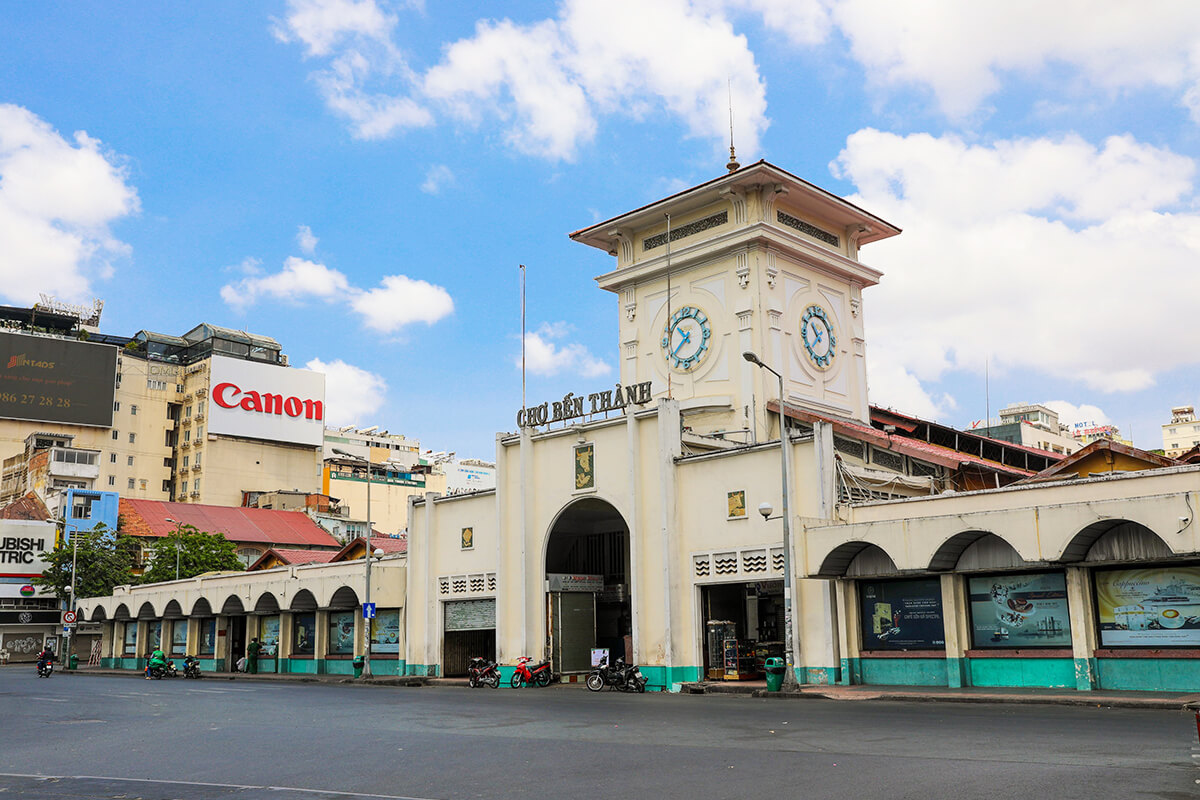
The iconic clock tower of Ben Thanh Market welcomes visitors to a world of shopping and dining.
4.2. The Mekong Delta’s Floating Markets: Commerce on the Water
A trip to the Mekong Delta is incomplete without visiting one of its famous floating markets. Cai Rang and Cai Be are the most well-known, where hundreds of boats gather each morning to trade agricultural goods. Wholesalers hang a sample of their product from a tall pole on their boat, so buyers can see what's for sale from a distance. It's a fascinating and efficient system that has existed for centuries.
What to Expect: To see the market at its busiest, you need to arrive early. You’ll navigate the waterways on a smaller boat, weaving between larger vessels laden with pineapples, watermelons, and other produce. You can even buy a hot bowl of noodle soup or a fresh coffee from one of the many floating cafes. This is truly one of the most unique Markets in Vietnam.
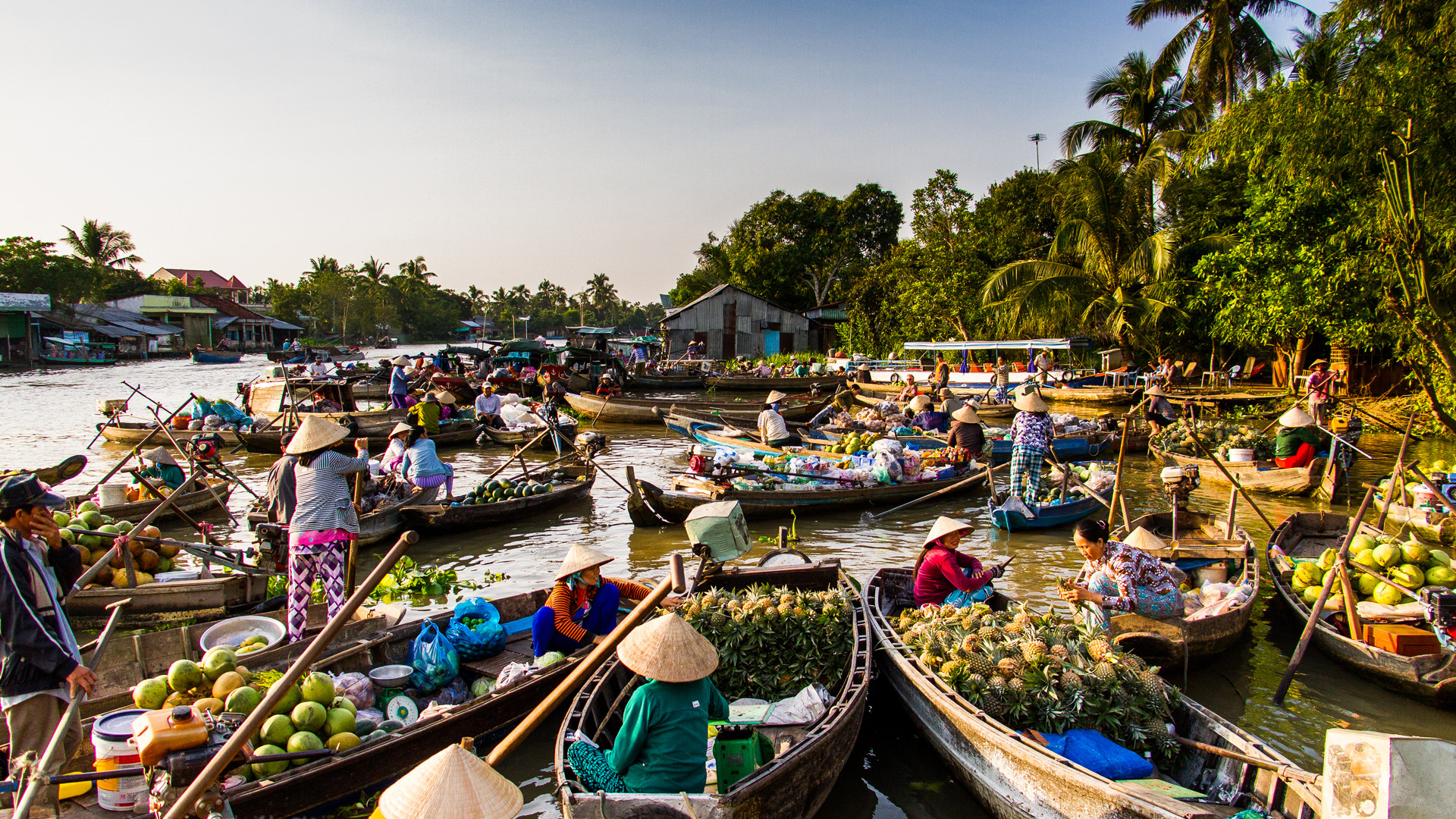
Life and commerce flow together at the Cai Rang floating market in the Mekong Delta.
5. Mastering the Art of Shopping in Markets in Vietnam
Shopping in Vietnamese markets is an interactive and rewarding experience, but it helps to know the local customs.
5.1. Bargaining with a Smile
In most markets (especially those with many tourists), bargaining is expected. The key is to do it with a friendly and respectful attitude. A good rule of thumb is to start by offering around 50-60% of the initial price and then negotiate from there. Always keep it light-hearted; a smile goes a long way. In more local markets or when buying food, prices are often fixed.
5.2. What to Buy: Souvenirs and Local Crafts
The Markets in Vietnam are a fantastic place to buy authentic souvenirs. Look for:
-
Silk and Textiles: Especially in places like Hoi An and Hanoi’s Hang Gai Street.
-
Handicrafts: Lacquerware, bamboo products, and hand-embroidered items.
-
Coffee and Spices: Vietnam is the world's second-largest coffee producer. Phu Quoc is famous for its peppercorns.
-
Conical Hats (Nón Lá): The quintessential symbol of Vietnam.
6. Let GrandViet Tour Guide Your Unforgettable Market Adventure
Navigating the vibrant chaos of the Markets in Vietnam can be daunting, but with GrandViet Tour, it becomes an enriching adventure. We don’t just take you to the markets; we help you experience them.
Our local guides provide invaluable insights, from sharing the history of Dong Xuan Market to helping you bargain for the best price on a silk scarf in Hoi An. We can arrange specialized tours, such as a street food tour through Ben Thanh's night market or a photography tour of a colorful highland market. With our expertise, you’ll discover hidden gems, connect with local vendors, and gain a deeper appreciation for the central role these markets play in Vietnamese life.
Why Choose GrandViet Tour for Your Market Exploration?
-
Local Expertise: Our guides know the best stalls, the fairest prices, and the most authentic experiences.
-
Customized Itineraries: We tailor your market visits to your interests, whether it's food, crafts, or culture.
-
Seamless Logistics: We handle all transportation, ensuring a comfortable and stress-free journey.
-
24/7 Support: Our team is always on hand to assist you.
7. Conclusion: More Than Just a Market
The Markets in Vietnam are a microcosm of the country itself: energetic, colorful, diverse, and deeply rooted in history and community. They are places of commerce, but also of connection. A visit to Dong Xuan Market, a boat ride through Cai Rang, or a morning spent in Hoi An’s central market will leave you with more than just souvenirs; it will give you lasting memories and a genuine understanding of Vietnamese culture.
Ready to dive into the vibrant world of Vietnamese markets? Contact GrandViet Tour today to start planning your personalized journey.
See more:
- What To Buy In Vietnam: Best Souvenirs & Where To Find Them
- Top Traditional Festivals in Vietnam Worth Experiencing
- Understanding Vietnamese Culture: What Tourists Should Know
- Best Trekking & Hiking Trails in Vietnam for Nature Lovers
8. Frequently Asked Questions
Q: What are the best times to visit Markets in Vietnam? A: Early morning (6 AM to 9 AM) is best for most markets, as this is when they are most active with locals and produce is freshest. Night markets typically open around 6 PM.
Q: Is it safe to eat street food in the markets? A: Yes, it is generally safe. A good rule is to eat at busy stalls where food is cooked fresh in front of you. A GrandViet Tour guide can lead you to the most reputable vendors.
Q: How do I bargain effectively in Markets in Vietnam? A: Start at 50-60% of the asking price, stay friendly, and be willing to walk away. If the vendor calls you back, you’re in a good negotiating position. Learning a few Vietnamese numbers can also help!
Q: Are credit cards accepted at the markets? A: No, the vast majority of market transactions are cash-only. It's essential to carry small denominations of Vietnamese Dong (VND).
Q: What is the most unique market experience in Vietnam? A: While every market is special, the floating markets of the Mekong Delta offer a truly unique experience that you won't find in many other parts of the world.
Q: How can GrandViet Tour enhance my market visit? A: GrandViet Tour provides expert local guides who can handle navigation, translation, and negotiation. We help you discover the best food, find authentic products, and understand the cultural context behind what you're seeing.
Other articles






© GrandViet Tour Co., Ltd. - International Tour Operator Licence 01-217/TCDL-GPLHQT.
Copyright © 2006 - 2020. All Rights Reserved.