

Travel Guide
Imperial Citadel of Hue – Discover Vietnam’s Ancient Royal Capital
Introduction to the Imperial Citadel of Hue
The Imperial Citadel of Hue stands on the northern bank of the Perfume River in central Vietnam. Built by the Nguyen Dynasty in the early 19th century, this fortified complex served as the political, religious and cultural heart of the country for nearly 150 years.
As the capital from 1802 to 1945, Hue witnessed the rise and fall of emperors and endured colonial conflicts and war. Today, the citadel is part of the Complex of Hue Monuments, a UNESCO World Heritage site. Our imperial citadel of hue guide explores its grand gates, palaces and gardens while offering travel advice. We also highlight how GrandViet Tour helps you unlock its secrets with knowledgeable guides and thoughtful itineraries.
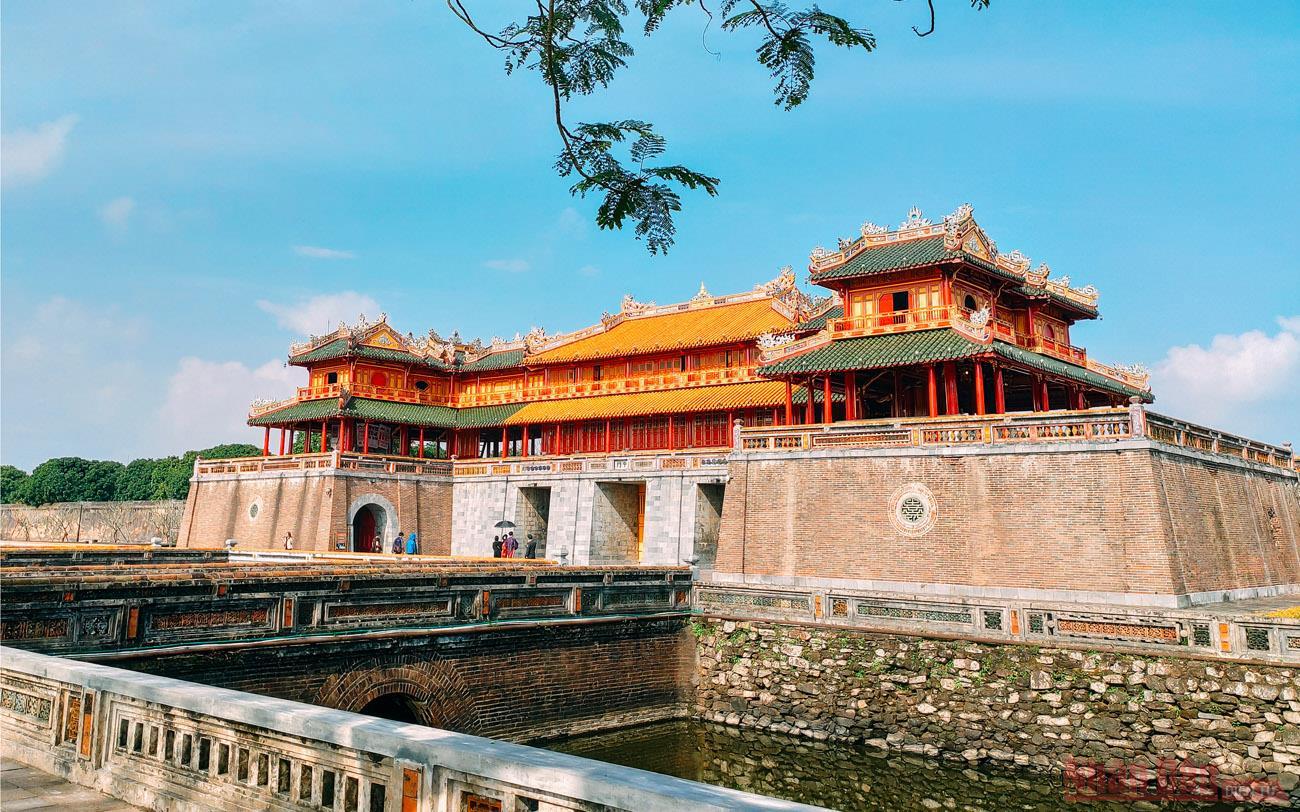
The Ngo Mon Gate, main entrance to Hue’s Imperial City
Imperial Citadel of Hue – Key Highlights
The citadel covers approximately 500 hectares and contains 83 historic structures[1]. Its design follows geomantic principles and features three concentric enclosures: the Outer Citadel, the Imperial City and the Forbidden Purple City. Key highlights include:
● Ngo Mon Gate: A grand multi-tiered gate topped with the Five Phoenix Pavilion, used for royal ceremonies.
● Thai Hoa Palace: The throne hall where emperors held court. Intricate lacquer work, carved dragons and gold leaf decorations adorn its interior.
● Forbidden Purple City: Once the private residence of the royal family. Though many buildings were destroyed during wars, restored sections reveal gardens, ponds and a network of pathways.
● Nine Dynastic Urns: Massive bronze urns, each dedicated to a Nguyen emperor, engraved with landscapes, animals and historical motifs.
● Royal Theatre (Duyet Thi Duong): Vietnam’s oldest theatre where royal dances and music were performed.
The citadel’s brick walls stand 10 metres high and enclose moats that once protected the royal family. UNESCO praises Hue for exemplifying a southern Vietnamese capital influenced by Chinese architecture, local artistry and French military engineering.
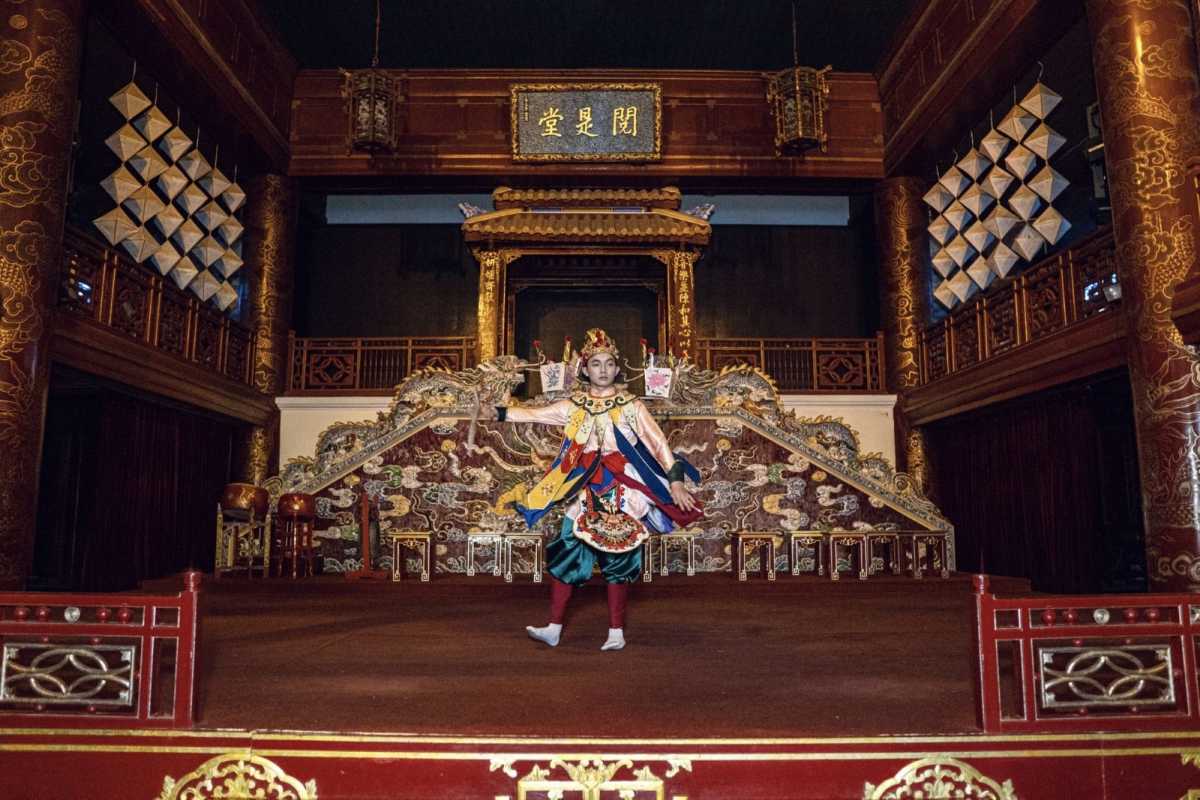
Inside Thai Hoa Palace, where emperors held audiences - Imperial Citadel of Hue
When to Visit Imperial Citadel of Hue (Weather & Seasons)
Hue experiences a tropical monsoon climate with distinct seasons:
● Dry Season (March–August): Warm to hot temperatures (25–35 °C) and abundant sunshine. April to July is ideal for visiting the citadel and attending cultural festivals.
● Rainy Season (September–February): Cooler temperatures (20–24 °C) with frequent showers. Persistent rain from October to December creates a poetic atmosphere along the Perfume River, though flooding can occur.
We recommend visiting early in the morning or late afternoon to avoid midday heat. Hue’s cultural calendar includes royal festivals featuring court music and costume parades, adding colour to your visit.

Morning mist over the Perfume River with the citadel walls in the distance - Imperial Citadel of Hue
Top Experiences & Itineraries
One-Day Heritage Tour
Spend the morning exploring the Imperial City. Enter through Ngo Mon Gate, visit Thai Hoa Palace and the Royal Theatre, then wander the Forbidden Purple City. After lunch, ride a dragon boat along the Perfume River to Thien Mu Pagoda, Hue’s iconic riverside temple.
Two–Three Day Royal Exploration
To appreciate Hue’s royal legacy, combine the citadel with the Royal Tombs scattered along the Perfume River. Tomb of Minh Mang, Tomb of Tu Duc and Tomb of Khai Dinh showcase different architectural styles and personal stories. Add visits to the vibrant Dong Ba Market, An Dinh Palace (a French-Vietnamese residence) and local villages crafting incense and hats.
Cultural Activities
Attend a Nhã Nhạc court music performance in the Royal Theatre, recognised by UNESCO as Intangible Cultural Heritage. Join a cooking class to prepare bun bo Hue, the city’s spicy beef noodle soup. Try on royal costumes for photos against the backdrop of ancient palaces.
Regional Extensions
Hue pairs naturally with Da Nang and Hoi An. The scenic drive over the Hai Van Pass reveals sweeping coastal vistas. In Da Nang, explore the Marble Mountains or My Khe Beach before continuing south to Hoi An. GrandViet Tour offers multi-city packages that showcase the diversity of central Vietnam.
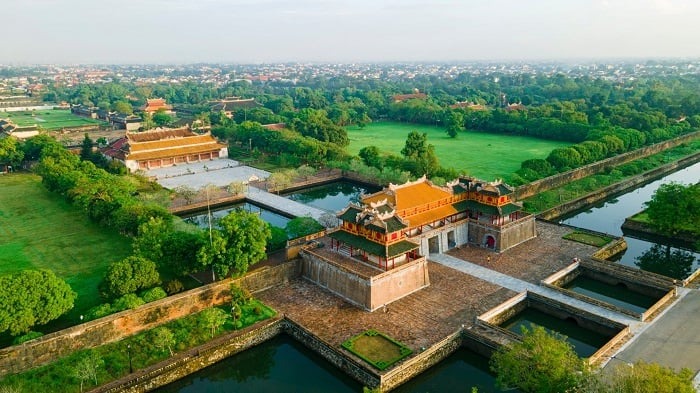
Restored gardens within the Forbidden Purple City - Imperial Citadel of Hue
How to Get Imperial Citadel of Hue (From Hanoi, Da Nang & Other Hubs)
Hue is easily reached via:
● By Air: Phu Bai International Airport (HUI) lies 15 km south of the city. Flights from Hanoi, Ho Chi Minh City and Da Nang operate daily.
● By Train: The Reunification Express connects Hue to Hanoi and Ho Chi Minh City. Travelling by rail offers scenic views of coastal plains and mountains.
● By Road: Buses and private cars run from Da Nang (about 2.5 hours) via the Hai Van Pass or the Hai Van Tunnel. The route from Hoi An takes about three hours.
● By Boat: Some tours include Perfume River cruises between the citadel and royal tombs.
GrandViet Tour arranges transfers and guides for all arrival methods, ensuring a smooth entry into the city.
Where to Stay in Imperial Citadel of Hue (Hotels & Riverside Retreats)
Hue offers a variety of accommodations:
- Heritage Hotels in the City Centre: Stay near the citadel and Dong Ba Market in stylish hotels set in renovated French villas.
- Riverside Resorts: Luxury resorts line the Perfume River, featuring pools, spas and garden villas. These tranquil retreats are perfect for couples and families.
- Boutique B&Bs: Smaller properties in Phu Hội and Vy Da districts provide personal service and cultural ambiance.
- Village Homestays: In nearby Thuy Bieu and Thanh Toan villages, homestays offer immersive experiences with home-cooked meals and bike rides through orchards.
GrandViet Tour partners with carefully selected hotels and homestays that combine comfort, authenticity and environmental awareness.
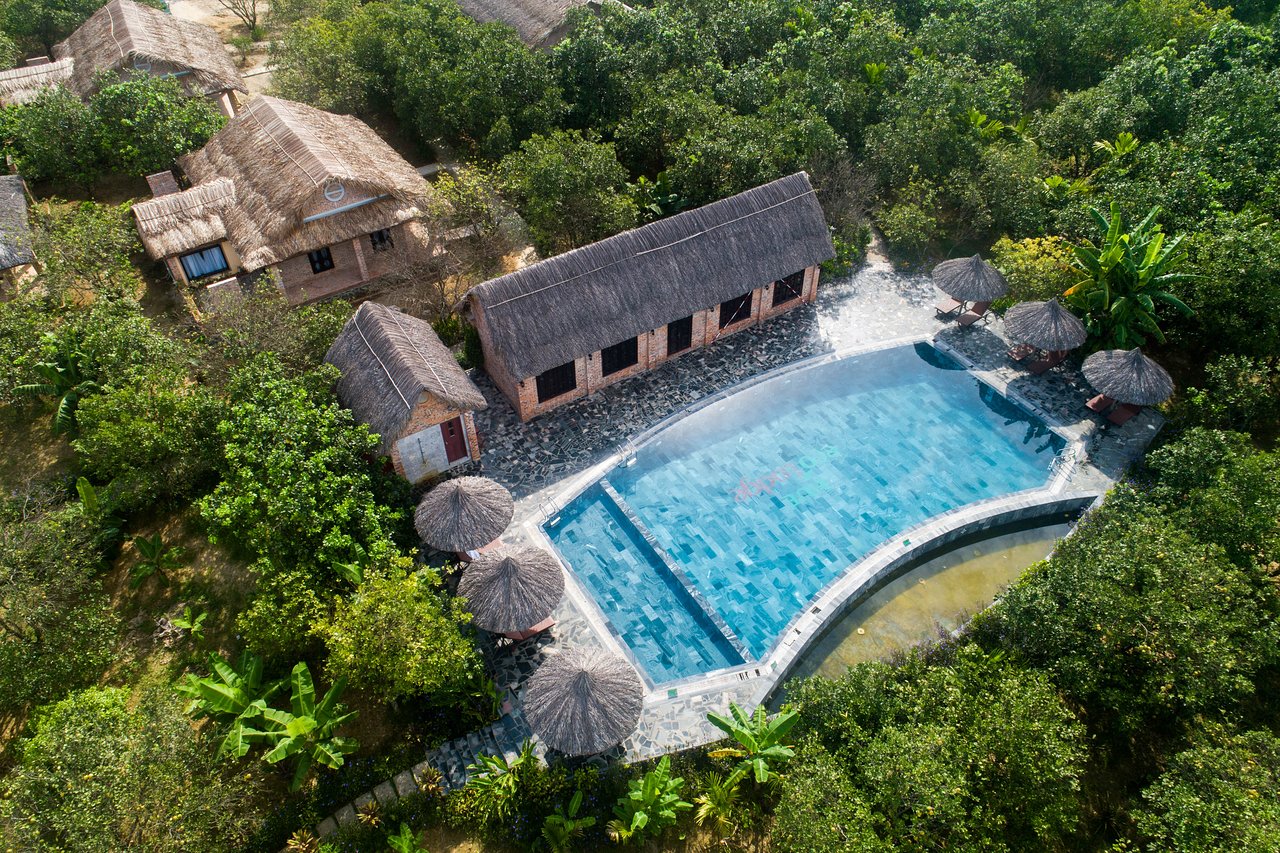
Riverside resort with colonial architecture and lush gardens
Travel Tips, Costs & Etiquette when visit Imperial Citadel of Hue
- Entrance Fees: Tickets to the Imperial City cost approximately 200,000 VND (about 8 USD). A combination ticket including major tombs and the citadel costs around 530,000 VND.
- Dress Code: Modest clothing is required—cover shoulders and knees when entering royal halls and temples. Wear comfortable shoes; the complex spans large distances.
- Best Time of Day: Visit early morning or late afternoon for softer light and fewer crowds. Late afternoon is especially atmospheric when golden sunlight illuminates ancient walls.
- Guides & Information: Hiring a local guide or joining a guided tour enhances your experience. Our guides share stories of dynastic intrigue, symbolism and restoration efforts.
- Respect Restoration Efforts: Do not climb on ancient walls or touch relief carvings. Restoration is ongoing; follow marked paths and heed signs.
- Local Cuisine: While in Hue, sample royal-inspired dishes like banh beo (steamed rice cakes), banh khoai (crispy pancakes) and che Hue (sweet soups).
Our GrandViet Tour guides will provide etiquette briefings and insider tips to ensure a respectful and enjoyable visit.
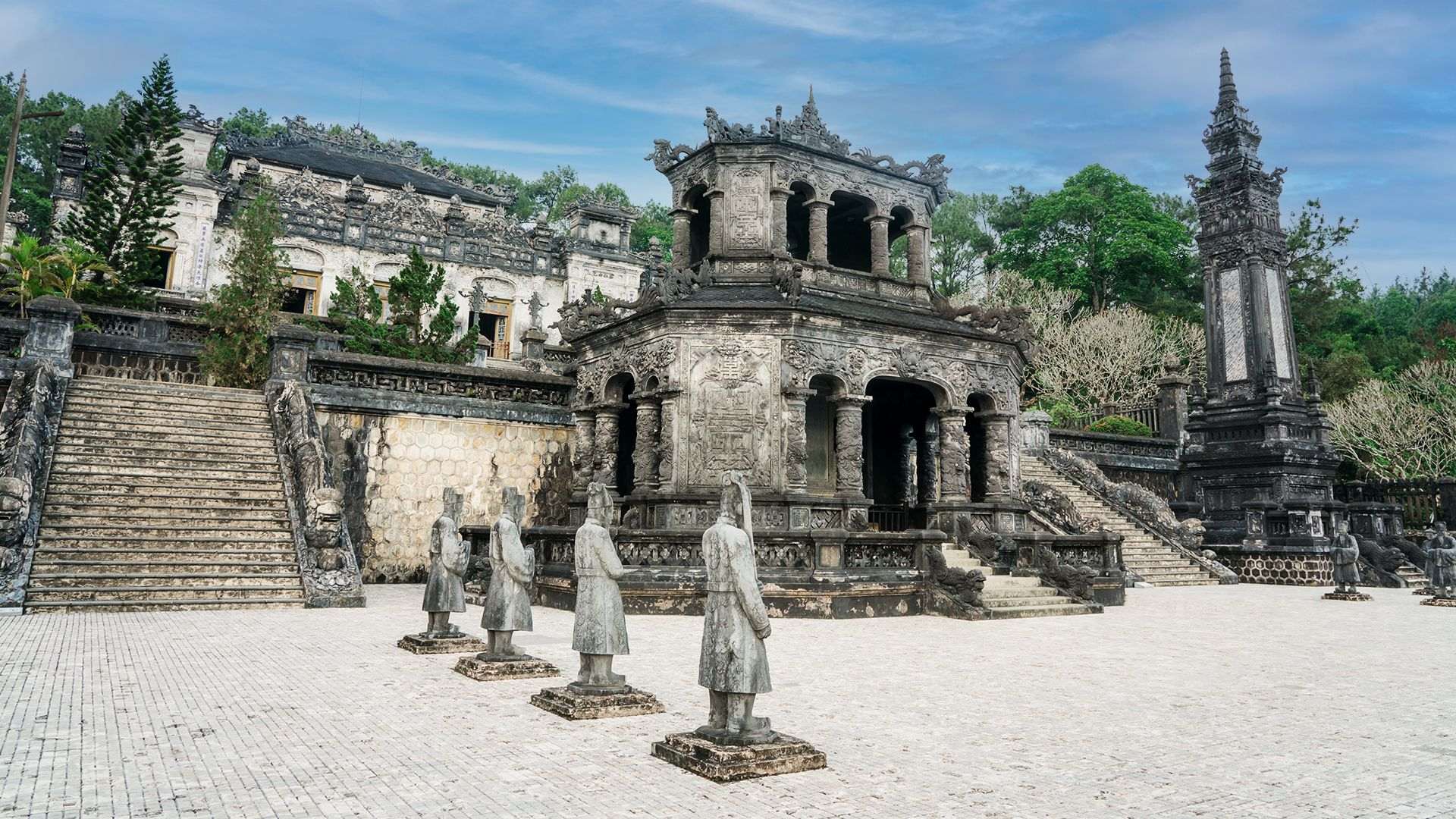
Intricate architecture of the Tomb of Khai Dinh
Why Travel with GrandViet Tour
Exploring the Imperial Citadel of Hue requires more than a map—it needs context. Our expert guides at GrandViet Tour bring the monuments to life with stories of emperors, concubines, mandarins and the city’s resilient inhabitants. We design itineraries that balance must-see sites with hidden gems, such as small temples, royal gardens and craft villages. Our packages combine the citadel with tombs, local cuisine and nearby destinations, offering a comprehensive look at Vietnam’s royal heritage. Travelling with us supports local communities and ongoing restoration efforts. Discover Hue’s imperial legacy with GrandViet Tour for an unforgettable journey.
See more:
- Classic Places to Visit in Vietnam for First-Time Travelers
- Ha Giang Travel Guide: Loop Route, Ethnic Culture & Views
- Top Historical Sites in Vietnam Every Tourist Should Visit
- Hoi An Travel Guide: Ancient Town, Food & Tailor Tips
- Da Lat Travel Guide: Cool Weather, Nature & Things to Do
- Hue Travel Guide: Imperial Sites, Food & Local Tips
- Phu Quoc Travel Guide: Beaches, Night Markets & More
Tour Vietnam Here
FAQs
Q1: Why is the Imperial Citadel of Hue important?
A1: It served as Vietnam’s capital under the Nguyen Dynasty from 1802 to 1945 and showcases unique architecture blending Vietnamese and foreign influences.
Q2: How long does it take to explore the citadel?
A2: Most visitors spend 2–3 hours. History enthusiasts may need half a day to explore thoroughly, including museums and gardens.
Q3: What should I wear?
A3: Wear modest clothing that covers shoulders and knees. Choose comfortable shoes for walking on uneven surfaces.
Q4: Are guided tours necessary?
A4: While self-guided visits are possible, a knowledgeable guide greatly enhances understanding of royal rituals, symbolism and restoration work.
Q5: Can I visit the citadel at night?
A5: Evening visits are available during festivals or special events featuring light shows and performances. Check schedules in advance.
Q6: What other attractions should I see in Hue?
A6: Royal tombs (Minh Mang, Tu Duc, Khai Dinh), Thien Mu Pagoda, Dong Ba Market, An Dinh Palace, garden houses and craft villages.
Q7: Why choose GrandViet Tour?
A7: We provide historical context, reliable guides, curated itineraries and seamless logistics, ensuring you appreciate Hue’s heritage fully.
Other articles







© GrandViet Tour Co., Ltd. - International Tour Operator Licence 01-217/TCDL-GPLHQT.
Copyright © 2006 - 2020. All Rights Reserved.