

Travel Guide
10 Amazing Waterfalls to Explore in Vietnam
1. Introduction: Vietnam’s Waterfall Wonderland
From the karst-framed cascades of the northeast to the basalt plateaus of the Central Highlands, the waterfalls in Vietnam reveal the country’s wild soul. These natural wonders are woven into local life and legend. They cool tropical afternoons, feed riverside farms, and draw travelers to remote valleys and forested slopes. Whether you love quick hikes, serene boat rides, or camera-ready panoramas, Vietnam’s waterfalls deliver experiences you’ll remember for life.
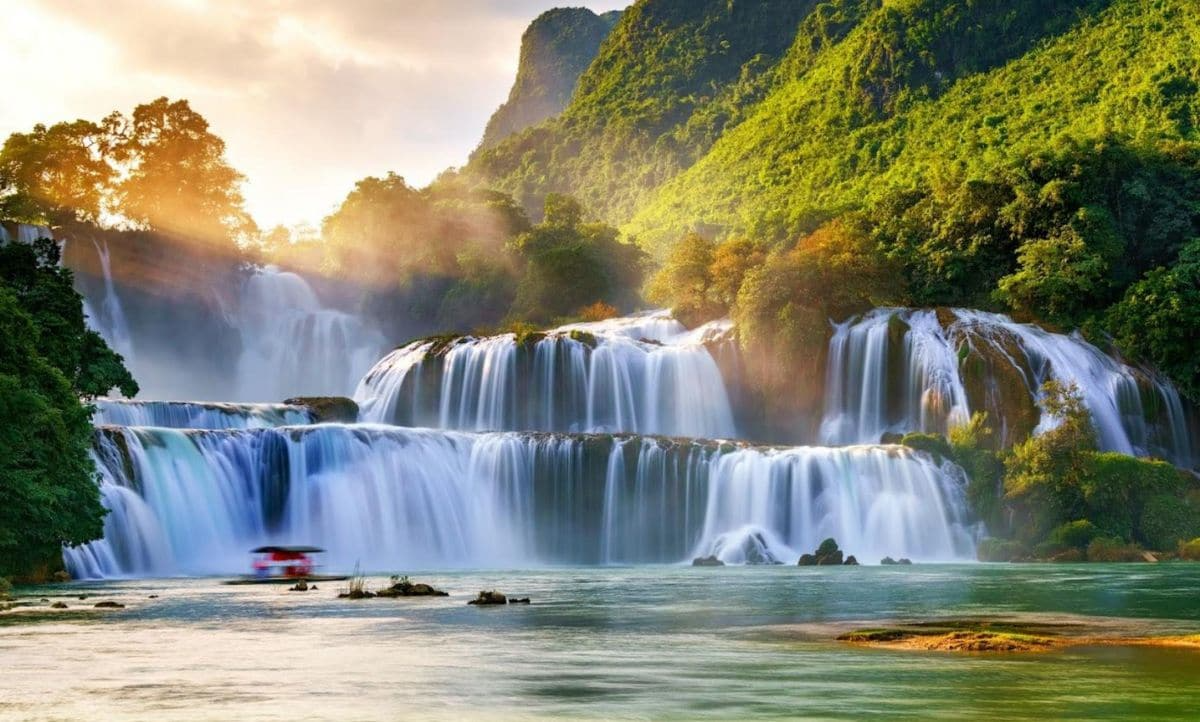
Vietnam’s diverse terrain creates waterfalls from border karsts to highland plateaus
2. Why Waterfalls in Vietnam Are Special
The waterfalls in Vietnam stand out for variety and cultural depth:
-
Mountain-to-sea diversity: karst mountains (Cao Bang), temperate pine highlands (Da Lat), tropical islands (Phu Quoc)
-
Living culture: Muong, Dao, Tay, Ede and other communities living beside falls and rivers
-
Legends and history: romantic tales, sacred groves, and wartime shelters carved into cliffs
-
Year-round appeal: gentle dry-season flows and powerful rainy-season torrents
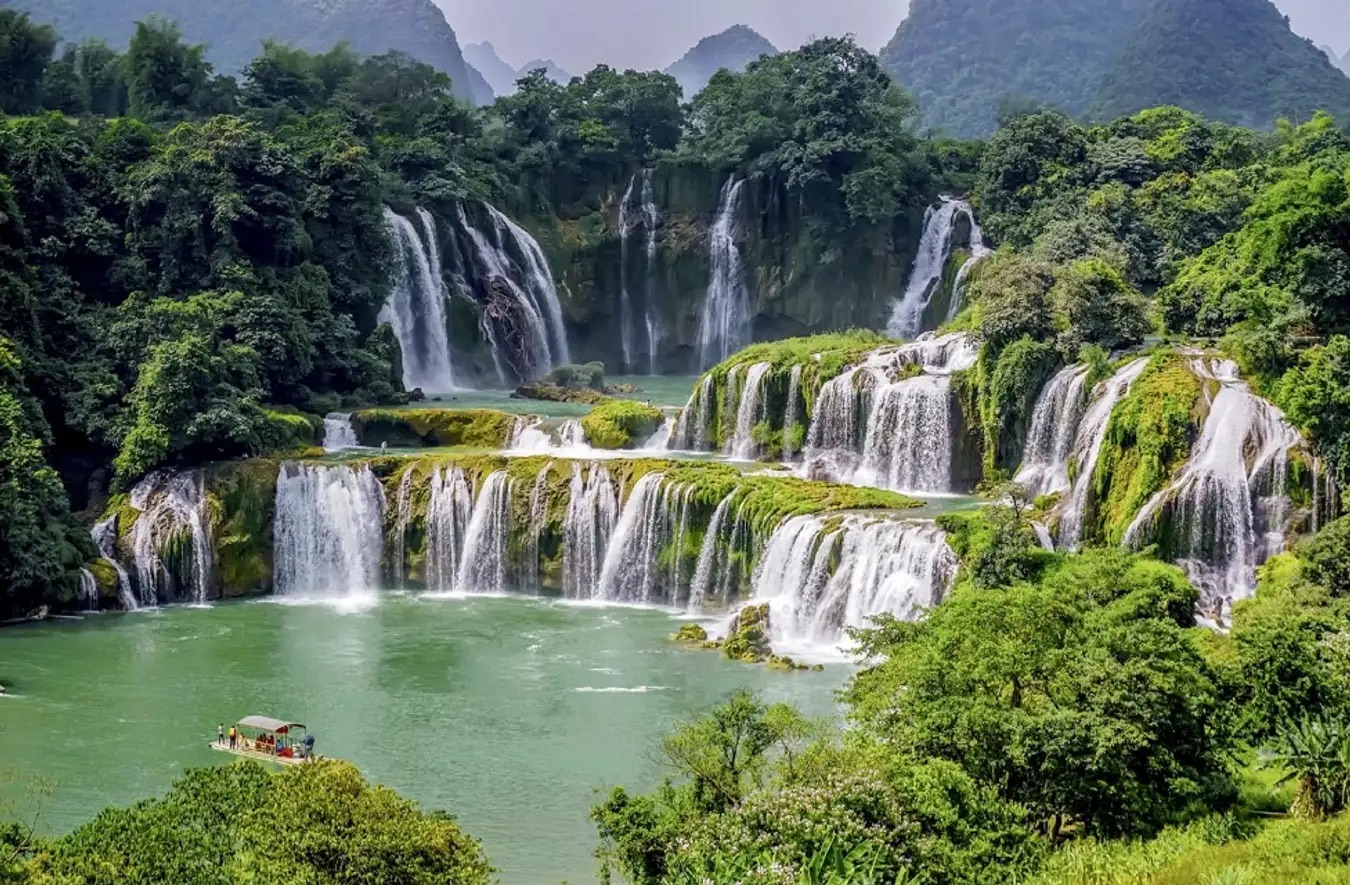
Each region adds its own geology, climate, and culture to the waterfall experience
3. Best Time to See Waterfalls in Vietnam
-
North (Cao Bang, Lai Chau, Hoa Binh): September–October for clear skies and rice harvest scenes; May–September for peak flow but more rain
-
Central Coast & Highlands (Khanh Hoa, Lam Dong, Dak Lak): October–April for dry-season hikes and picnics; waterfalls swell after rains
-
Islands (Phu Quoc): May–September when streams run strongest; lighter crowds early mornings on weekdays

Choose between dramatic rainy-season power or clear dry-season hiking conditions
4. Top 10 Waterfalls in Vietnam
4.1. Ban Gioc Waterfall (Cao Bang)
A national icon on the Vietnam–China border, Ban Gioc is the country’s largest waterfall and among the world’s great transboundary cascades. Multi-tiered curtains plunge into jade pools backed by limestone peaks—pure theater.
-
Best time: September–October (scenery), May–September (peak flow)
-
Don’t miss: Bamboo raft ride to the base for misty close-ups
-
Practical: 45,000 VND entrance; carry passport for ID checks
-
GrandViet Tour tip: Combine with Nguom Ngao Cave and Phat Tich Truc Lam pagoda viewpoints

Ban Gioc’s terraced curtains and karst backdrop make it Vietnam’s signature cascade
4.2. Mu Waterfall (Hoa Binh)
Tucked high in the Truong Son range, Mu’s white foams spill over natural steps into a cool sapphire pool—perfect for a refreshing dip after the forest walk.
-
Best time: May–September (lush); October–April (clear, quieter)
-
Culture: Meet friendly Muong communities nearby
-
Practical: No set entrance fee; bring cash for parking/snacks
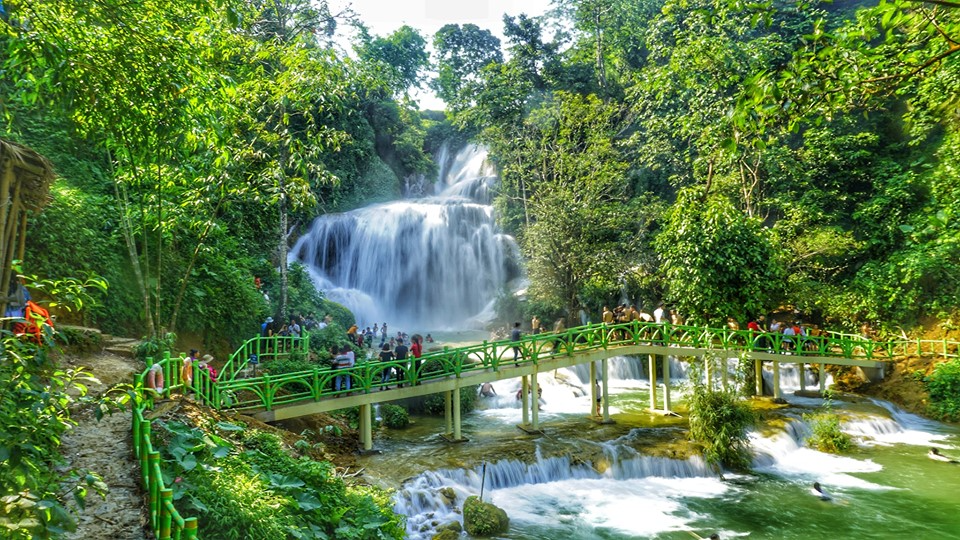
Stepped limestone shelves, cool pools, and simple village life all in one stop
4.3. Tac Tinh Waterfall (Lai Chau)
Also called Love Waterfall, Tac Tinh pours 130 m from Hoang Lien Son into a tranquil lake. The Dao people tell a poignant love legend tied to this falls.
-
Best time: Dry season (Oct–Apr) for gentle veils; rainy season (May–Sep) for thunderous flow
-
Photography: Rainbows often appear on sunny days
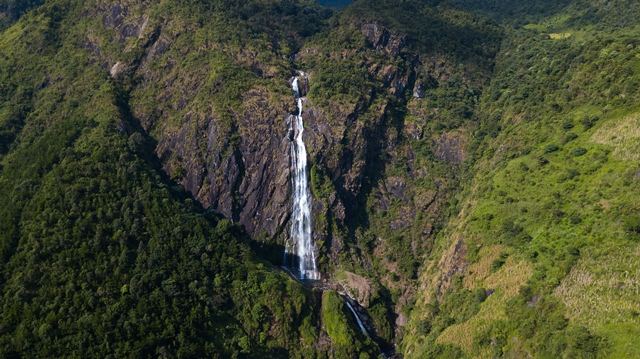
A tall, graceful cascade framed by green valleys and Dao culture
4.4. May Waterfall (Thanh Hoa)
“Nine Steps of Love” describes nine cascading levels rising like a cloud stairway. A short, steady climb rewards you with sweeping views and crystal pools.
-
Best time: From August onward for the most vivid scene
-
Vibe: Still off most foreign itineraries—quiet, authentic
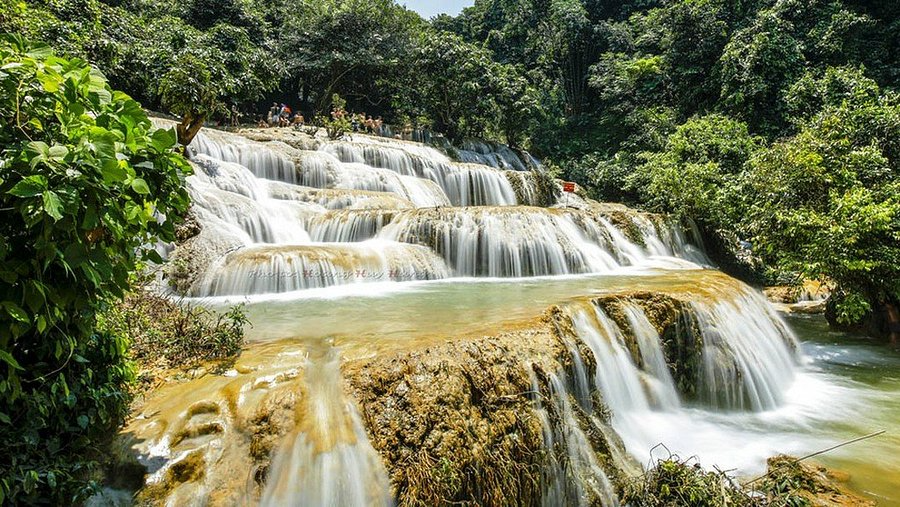
Nine natural tiers, clear lakes, and rolling countryside vistas
4.5. Yang Bay Waterfall (Khanh Hoa)
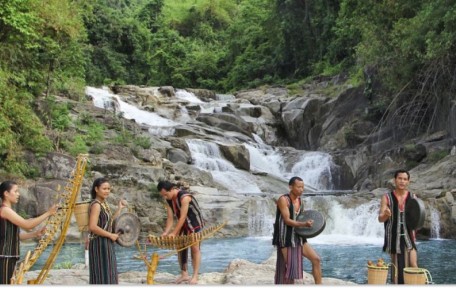
Inland from Nha Trang, Yang Bay flows through a protected valley ringed by dense forest. Ecotrails, small boats, and nearby caves add variety to a day trip.
-
Best time: October–April; weekdays for fewer crowds
-
Practical: Tiered tickets (120,000–300,000 VND) depending on package
A broad, powerful fall with forest walks and gentle lake rides
4.6. Suoi Tranh Waterfall (Phu Quoc, Kien Giang)
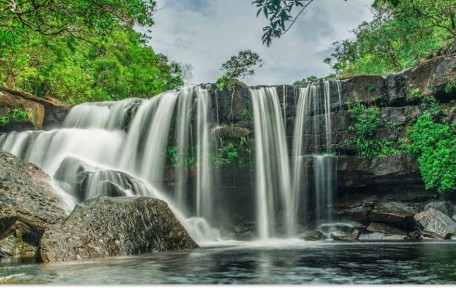
A gentle, multi-drop cascade along a wooded stream near Duong Dong. Sunlight through the canopy sparkles on the water like a fairyland scene.
-
Best time: May–September
-
Practical: Entry ~10,000 VND/adult; cave exploration available nearby
-
Activities: Picnics, short hikes, upstream pools for a cool soak

Island ambiance: short forest strolls and shady pools close to town
4.7. Pongour Waterfall (Lam Dong)
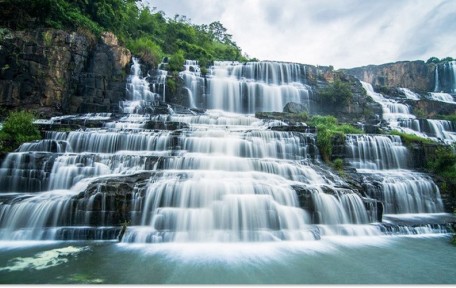
Nicknamed the “Seven-Tiered Fall,” Pongour spreads over terraced basalt ledges. Climb the natural steps and feel the spray from multiple curtains.
-
Best time: October–April; avoid peak afternoon picnic hours
-
Legend: A tribal queen and loyal rhinoceroses are woven into local lore

Wide, terraced curtains create one of Da Lat’s most photogenic scenes
4.8. Dambri Waterfall (Lam Dong)
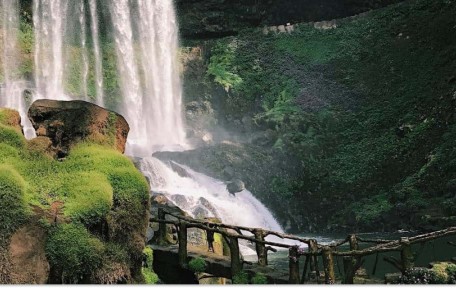
Lam Dong’s tallest fall (70 m) is dramatic yet accessible, with stairs, an elevator, and even a coaster ride. On sunny days, rainbows flare in the mist.
-
Best time: Year-round; weekdays for tranquility
-
Practical: 50,000 VND entrance
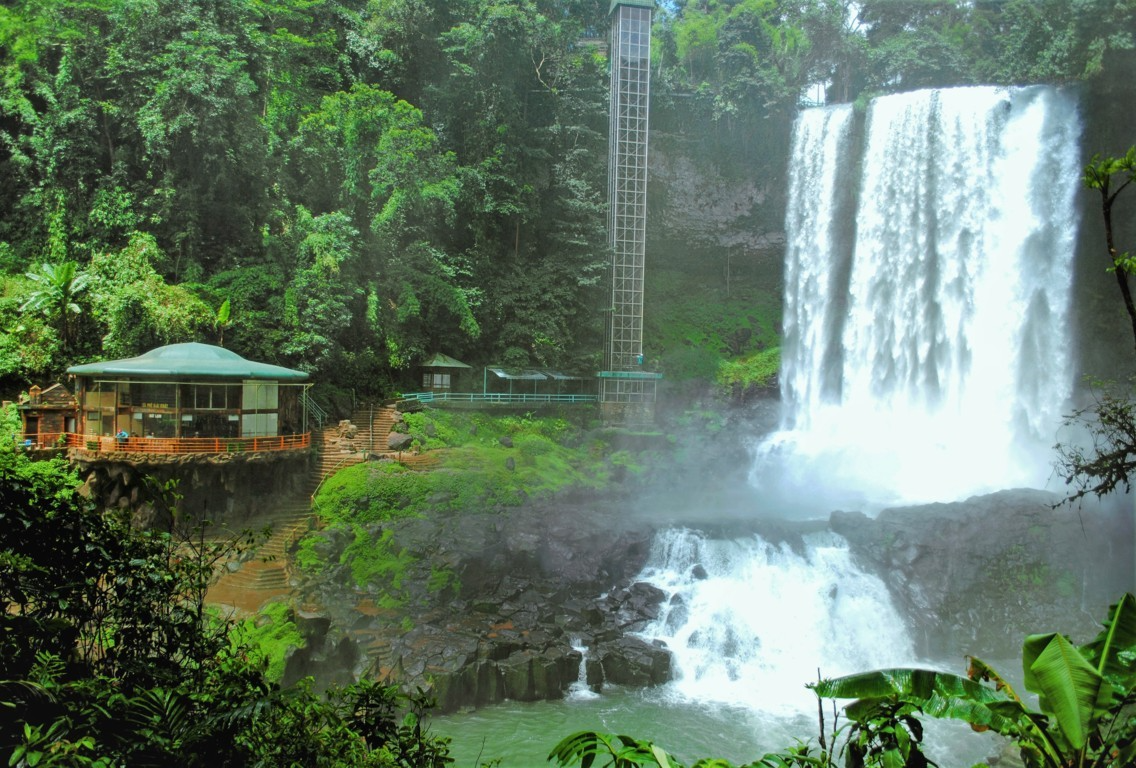
High, thundering drop and rainbow mists in a forested reserve
4.9. Dray Nur Waterfall (Dak Lak)
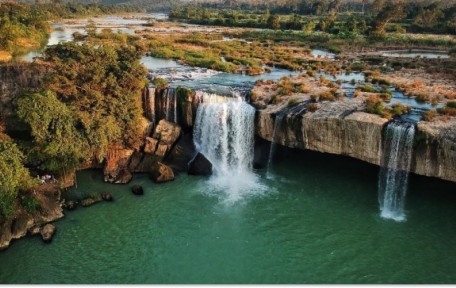
The “Wife” of the Serepok River’s famed waterfall pair, Dray Nur is 250 m long and 30 m high, thundering into a deep green lake. Ede folklore whispers through the spray.
-
Best time: October–April (clear trails, good flow)
-
Practical: 30,000–40,000 VND entrance; best photography 5–7 am
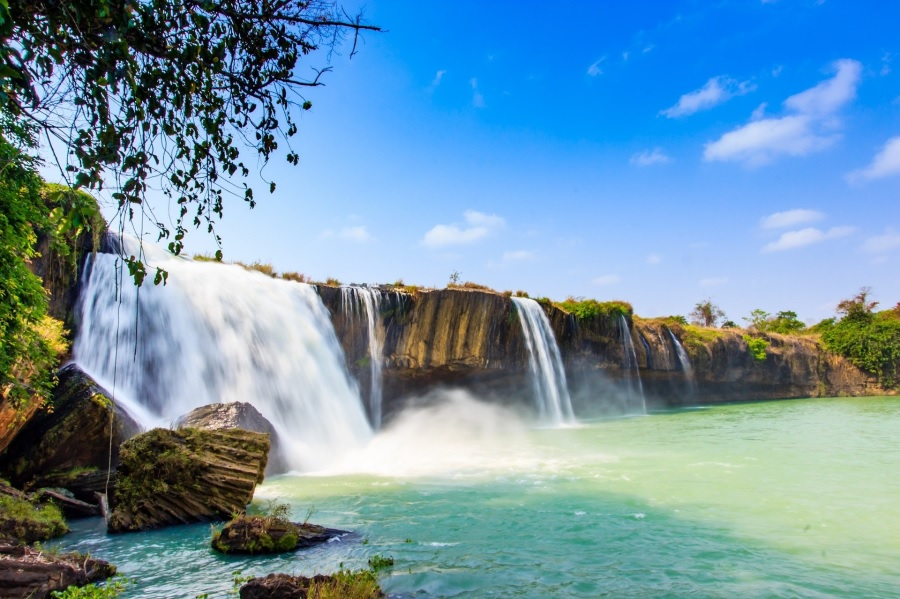
One of the Central Highlands’ mightiest cascades with deep cultural roots
4.10. Thuy Tien Waterfall (Dak Lak)
A three-level waterfall hidden amid coffee and rubber country. Each tier feels different: tree-root canopies, shallow natural pools, and a sheer plunge.
-
Best time: Dry season (Nov–Apr)
-
Practical: 25,000 VND/adult; peaceful on weekdays

Layered pools and a vertical finale in a tranquil highland forest
5. Safety, Sustainability, and Local Etiquette
-
Safety first: Watch slippery rocks, heed warning signs, and avoid swimming in strong currents
-
Leave no trace: Pack out your trash; stick to marked trails; never carve rocks or trees
-
Dress modestly near villages; ask permission before photographing people
-
Support locals: Choose licensed guides, buy community-made snacks or crafts, and use official boats
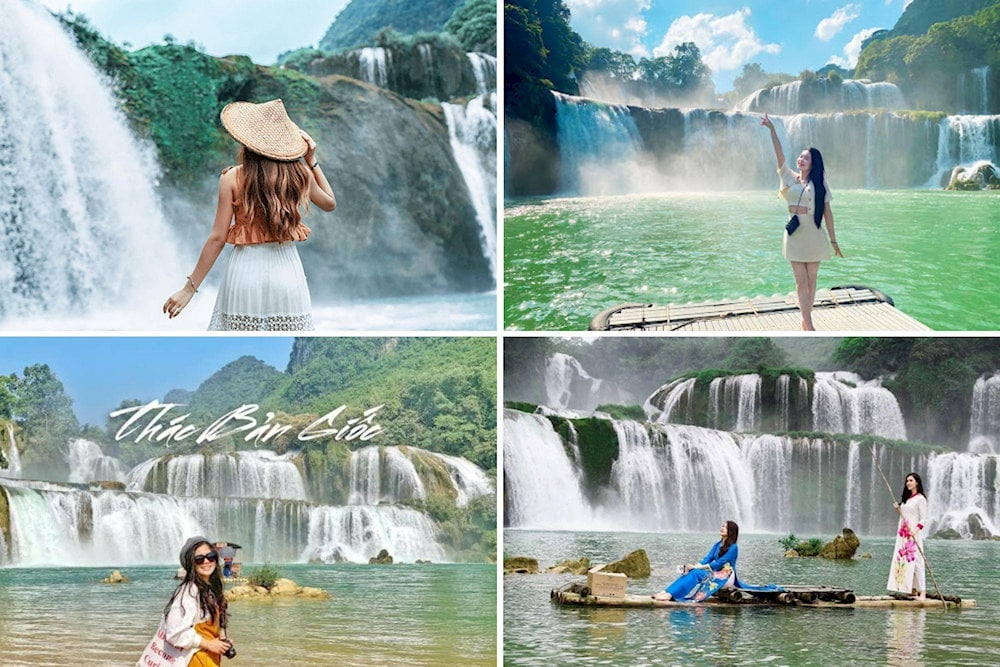
Sustainable travel keeps Vietnam’s waterfalls pristine and communities thriving
6. Planning Your Waterfall Journey
-
Access & transport: Some sites are close to cities (Dambri, Pongour, Suoi Tranh); others require private car/motorbike and local guidance (Ban Gioc, Tac Tinh)
-
Timing: Start early to avoid heat and crowds; check weather in rainy months
-
Packing list: Grippy footwear, quick-dry layers, rain jacket, insect repellent, water, snacks, dry bag
-
With GrandViet Tour: We design waterfall routes that balance scenery, culture, comfort, and safety—ideal for families, photographers, and nature lovers
7. Conclusion
The waterfalls in Vietnam are more than scenic backdrops—they’re windows into the country’s geology, ecosystems, and village life. From Ban Gioc’s karst theater to Dray Nur’s volcanic roar, each region unveils a different chapter of Vietnam’s natural story. Ready to chase the coolest cascades?
GrandViet Tour’s specialists curate waterfall-focused journeys around your schedule and interests, pairing spectacular nature with cultural immersion and smooth logistics. Discover the most unforgettable waterfalls in Vietnam—the GrandViet way.
8. Frequently Asked Questions
Q: What is the best season to see waterfalls in Vietnam? A: For the north, September–October balances clear skies and strong flow; for Central Highlands and coast, October–April offers easy access with reliable views; Phu Quoc peaks May–September.
Q: Are the waterfalls in Vietnam suitable for families? A: Yes. Sites like Dambri, Pongour, Suoi Tranh, and Yang Bay have short walks and facilities. Remote falls may require longer hikes—GrandViet Tour can tailor the difficulty.
Q: Can I swim at these waterfalls? A: Only where allowed and conditions are calm—usually at lower pools like Mu or Suoi Tranh. Avoid deep or fast water and always follow local guidance.
Q: How many days should I plan for a waterfall itinerary? A: A weekend fits 1–2 falls near Da Lat or Nha Trang; 3–5 days allow Ban Gioc + Ba Be or a Central Highlands loop; 7–10 days can cover multiple regions with cultural stops.
Q: Do I need a guide to visit waterfalls in Vietnam? A: Not always, but guides maximize safety, access, and cultural insight—especially for remote falls. GrandViet Tour’s vetted guides are a smart choice.
Q: What gear should I bring? A: Non-slip shoes, lightweight rain jacket, insect repellent, refillable bottle, sunscreen, snacks, and a waterproof pouch for phone and documents.
Q: Which waterfalls in Vietnam are the most photogenic? A: Ban Gioc (karst panorama), Pongour (terraced curtains), Dambri (rainbows), Dray Nur (power + scale), and May (nine levels) are top picks for photographers.
Q: Can GrandViet Tour customize a trip around waterfalls and local culture? A: Absolutely. We combine waterfalls with caves, rice fields, coffee farms, homestays, and market visits for a balanced, immersive journey.
Other articles


© GrandViet Tour Co., Ltd. - International Tour Operator Licence 01-217/TCDL-GPLHQT.
Copyright © 2006 - 2020. All Rights Reserved.